Wellness Series, Part 4: Nourish Your Body - The Power of Positive Eating Habits
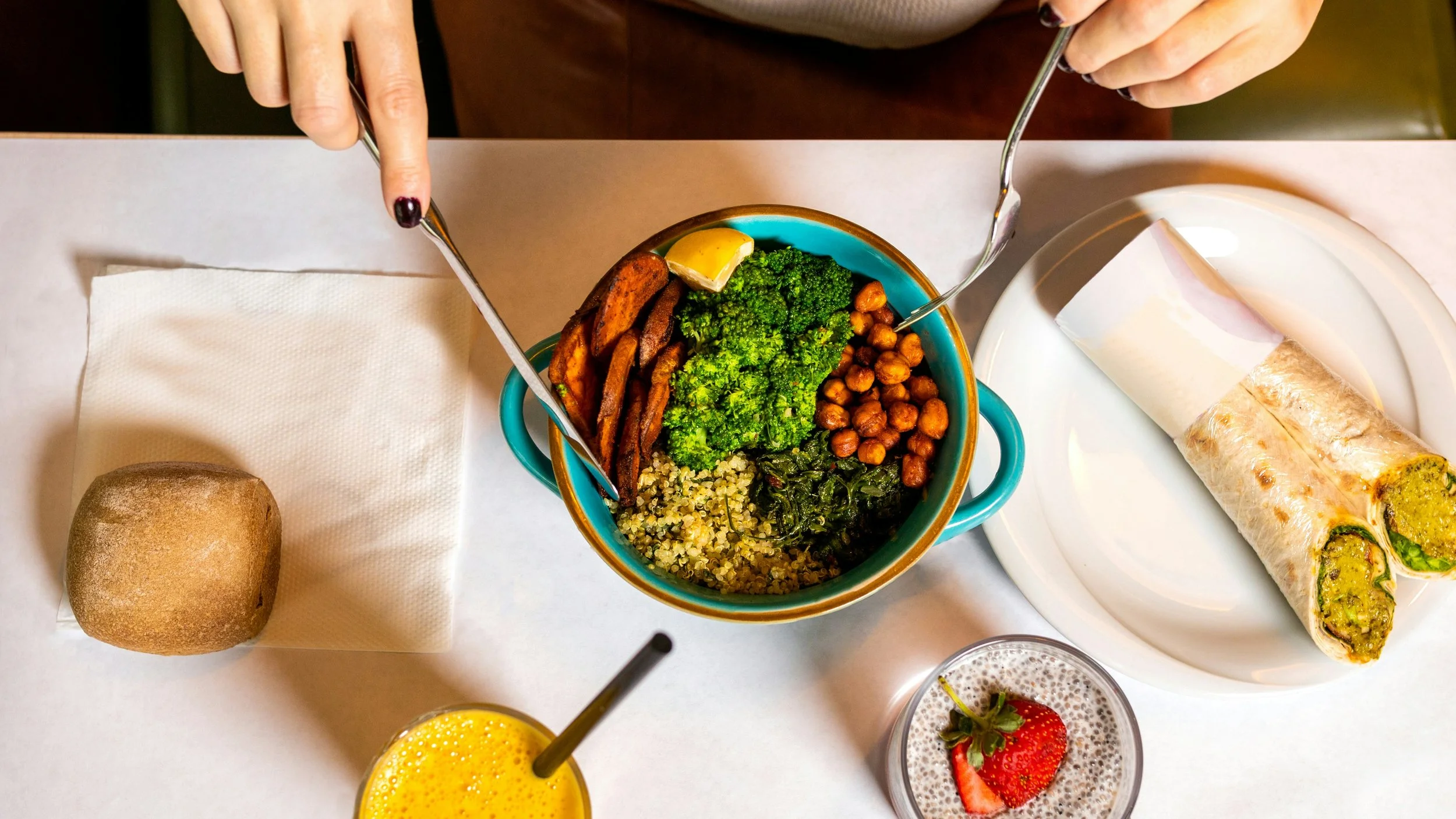
Photo by Farhad Ibrahimzade on Unsplash
What do I mean by ‘nourishment’?
Nourishment refers to anything that we provide our bodies with that supports our health & wellbeing. So whilst healthy foods and water are the main things that come to mind, sunlight, fresh air, supplements and even natural moisturisers fit into this category. Food, however, does play a huge role in our health, and so I want to talk a bit more about how giving our body the nutrients it needs supports our health & wellbeing.
We've all heard the old adage Food is medicine, and it really can be. The foods we eat can either sustain and promote our health, or do the opposite. The nutrients from the foods we consume enable the cells in our bodies to perform their necessary functions (think macro and micronutrients, pre and probiotics).
The problem in today's world is that we are bombarded with alluring food-like products that are heavily processed and lack any of the nutrients we need. These are high in calories, saturated fat, salt and sugar, which can spike our blood sugar and lead to cravings and subsequent overeating, as a result of their strong influence on specific pleasure centers in the brain. So it's no wonder that so many of us are struggling to develop and maintain a healthy diet - so many of of the products that are out on shelves are engineered to get us hooked on them, which is why it can be really hard to give up our comfort foods and adopt a mostly whole-foods diet.
Recent research has also shown the importance of the microbiome in supporting health and our immune systems. 70% of our immune system is located in the gut, and so what we put into our bodies will impact our health and immune response. Also, there is a link between our brains and our guts (known as the gut-brain axis), so eating to support our physical health will also support our mental and emotional wellbeing.
How to get more nourishment
When it comes to nourishment, what, how, when and where we eat matters.
What to Eat
The Rainbow
Our microbiome thrives from diversity, and research shows that for optimal gut health we should eat at least 30 different plant foods each week - that includes fruit, vegetables, grains, legumes and pulses, and even herbs and spices (each herb or spice counts as 1/4 of a plant food!).
Fiber
Fiber is so important for health, yet most adults in the Western world don’t meet the daily recommended amount - at least 30g/day. Fiber can only be found in plants, so by eating a varied whole food diet and aiming to have at least 30 different plant foods each week, you should be able to meet the daily recommendation.
Protein
Consuming protein with every meal keeps you full for longer. Plant sources are generally more nourishing because they are packed with fiber and antioxidants, and lower in saturated fat (think beans, lentils, tofu, tempeh, nuts and nut butters).
Supplementation
Having a varied diet is key, however sometimes our bodies need that extra TLC. Your doctor can check for any vitamin and mineral deficiencies and make recommendations.
How to Eat
Plan ahead
Don’t wait until you are starving and end up having whatever is in reach - plan your meals ahead of time, so that you end up making healthy choices and don’t overeat.
Follow an 80/20 approach
If you don’t have any chronic health issues that require a specific dietary pattern, then allowing yourself the occasional treat is absolutely fine, as long as you aim for an 80/20 ratio. What does that look like? With about 20 meals a week, at least 16 of them should be whole-food, mainly plant-based (so rich in fiber and including healthy sources of protein) and the remaining 4 can be more indulgent. It’s important to remember to enjoy yourself and savour those favourite meals, or a dinner out with someone dear.
Slow down
Our busy lifestyles mean that eating is often viewed as a tickbox rather than an essential process that supports our health and wellbeing. Make sure you don’t eat in a rush or whilst feeling stressed, and chew each bite well to minimise any digestive discomfort and ensure you are getting the most nourishment possible from your meal.
When to Eat
Break fast or not?
We’re often told that breakfast is the most important part of the day, and that three main meals each day are the standard. The truth is that everyone is different, so find what works for you and stick with it. If you have any chronic health conditions, it’s important to discuss your meal timings and goals with a doctor or a dietitian.
Consistency matters
Whilst there is no one-size-fits-all when it comes to meal times, eating at similar times consistently helps your body optimise its energy between meals and perform at its best - which makes you perform at your best!
Have your last meal 2-3 hours before bed
Try to have your last meal at least a couple of hours before going to bed - otherwise your digestive system will be working harder processing the food whilst you are sleeping or trying to fall asleep, decreasing the quality of your sleep and potentially creating some digestive discomfort (e.g. heartburn or acid reflux).
Take a 12 on, 12 off approach
Regardless of when you choose to have your meals, it’s important to give your digestive system a break so it can perform at its best, so trying to have all your meals within a 12 hour period is really helpful.
Where to Eat
In a designated space, without distractions
Eating should be an activity in itself. If we watch TV or check our phones whilst we eat, we are less likely to chew properly, which can lead to digestive discomfort. Eating while distracted also makes our brain slower in receiving the fullness signals from our gut, making it more likely that we overeat.
Sitting
I know it sounds obvious, but how many of us sometimes end up eating whilst standing, or even worse - whilst walking? No wonder our digestion is all over the place when we do that - we should protect our meal times as much as possible and ensure that we are giving our body a chance to relax, so that our digestive system can do its job properly and extract all the nutrients our body needs to stay well and healthy.
Healthy eating on the go
If you have a few busy days ahead or know that you’re going to be travelling or commuting a lot, plan ahead and make sure you have some healthy options on hand, like nuts or nut butters and fruit or wholegrain crackers, to keep hunger at bay - planning for and buying these snacks ahead of time will also save you money, as you end up paying a fraction of the price of buying these snacks pre-packaged in a supermarket.
Common challenges
There can be challenges when trying to bring more nourishment into our lives. One of the main challenges is feeling stressed or overwhelmed, or even sad. Emotional eating is something that impacts many of us, and it comes from the way we deal with difficult emotions. Some emotions make us feel a sense of emptiness or an emotional void, and food can be a way to fill that void by creating a temporary sense of 'fullness'. Whilst it helps us cope in the moment, this behaviour might not be aligned with our goals and long term health. Developing our emotional agility can help us overcome this challenge, and so can working with a qualified psychoterapist.
Another challenge when it comes to nourishment are ultra processed foods (UPFs). Even if emotional eating is not a concern, the ubiquity of processed foods in today's world can make it challenging to eat enough of the right foods. In the UK, on average, 54% of calories in people's diets come from ultra-processed foods and another 10% come from processed foods. This means that only about 36% of calories come from unprocessed or minimally processed foods. Apart from the fact that ultra processed food doesn't have much nutritional value and is engineered to get us hooked, it also disrupts our hormones and negatively impacts our microbiome. The best way to tackle this is by focusing on what to include rather than what to exclude from our diet, and by aiming for an 80/20 split in terms of minimally processed versus processed foods.
Finally, for many of us it can be a struggle to know what foods to focus on given the conflicting information that is out there. Research shows that, for optimal nutrition, we should aim for a mainly whole-foods diet (think fruit, vegetables, pulses and wholegrains) and consume at least 30 different plant foods each week. If you have any specific health challenges or any food intolerances, it is helpful to work with a dietitian to identify what an ideal diet might look like for you.
How do we make good nutrition a consistent part of our daily lives?
So how can you start to create sustainable healthy habits when it comes to nourishment? As mentioned in my previous posts, it's important to always start small.
Above I shared lots of tips on how to get more nourishment, from what to eat to how, when and where to eat as well. These are general things to consider when you are looking to improve the nourishment you give your body. Ask yourself 'What is one thing I can change regarding my way of eating that will help my wellbeing?', and then focus on making that behaviour a part of your routine, before looking at changing anything else as well.
Here are some examples of small actions you could start with (remember to focus on one at a time!):
👉🏼 if you're a breakfast person, find a balanced breakfast that works for you (think protein, complex carbs and fiber) and stick to it every weekday, to set you up for the day
👉🏼 start having your meals around the same time - if it's too complicated to align them all, focus on one mealtime first
👉🏼 start eating more slowly and chewing each bite better
👉🏼 try to have your meals within a 12-hour window
👉🏼 have your meals without any distractions
These are some of the many things you could do. The key is to ask yourself that question and figure out what works for you. If you feel that you need more personalised support with building positive eating habits or a health-related goal, then go ahead and book a Discovery Call with me, so we can chat further and see if health coaching could help you.